New Super Mario Bros. 2 | Review


Posted: August 25, 2012

Mario’s had himself an eventful life. He’s saved a princess in the Mushroom Kingdom, he’s saved a princess in Dinosaur Land and he’s even saved a princess in MarioLand. He’s a well traveled guy! Born into the Nintendo family, Mario had an outstanding start in life with Super Mario Bros., a game that placed him firmly in the head of his class. Through his adolescence his creativity and polish only heightened his title as video gaming’s mascot, as games like Super Mario Bros. 3 and Super Mario World built off of the now famous Mario’esque gameplay and aesthetics. In his teens the emboldened plumber broke into the third dimension, showing the rest of the gaming industry that a 2D translation into 3D was even possible, and again, setting the bar higher while he was at it. Recently, Mario has begun to reach middle age, and like all middle aged men he has been desperately grabbing onto and recreating what made him great in his early years. Yet unlike most middle aged men, he has a corporation behind him. So instead of having to see him trudge around the Mushroom Kingdom in his high school jersey, or scoot around town in a Corvette, we have to watch him use and reuse classic Mario game mechanics and characters in a desperate attempt to evoke nostalgia, at the cost of innovation. 

Super Princess Peach | Déjà-Review


Posted: August 19, 2012

For years video games have been accused of harboring misogynistic points of view and behavior. I would argue that this idea spawns from the overwhelming majority males hold in gaming culture, and that many times the depiction of females falls to those who cynically view gamers as sexually repressed pubescent boys who view women as if they’re in an eighties teen comedy. But this only excuses the majority of female game tropes, i.e. the sexy warrior with armor skimpier than lingerie models. Other games aren’t meant to titillate male gamers, instead they offer up an unrealistic or ignorant view of women. Just look at every Bratz game, or dress-up social game. Hell, even the well meaning Cooking Mama had players questioning whether or not it was a modern day Easy Bake Oven, teaching girls their role in the kitchen.

Enter Super Princess Peach, this seemed like the obvious next step for Nintendo; Yoshi got his own game, and so did Luigi, all they really had left was Peach and Toad. And I don’t think Toad appeals to quite as many demographics as Peach does– what with being a near genderless mushroom with a face. Soon after the game’s release it was attacked for its negative portrayal of Peach. Many claimed that the game was merely a back-handed cash-in towards a female audience. But this is Nintendo. People must be blowing things out of proportion – right?

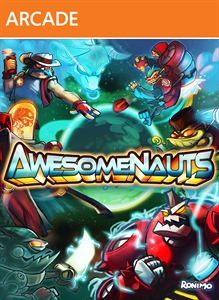
Awesomenauts | Review


Posted: August 14, 2012

My son is really into League of Legends. He eats that stuff up pretty hardcore. Over the last few years I've made a concerted effort to join him in this game only to come to the realization that I'm simply not cut out for the "learn by humilating defeat" style of play. I wanted to try and find something that would appeal to his tastes but also cater to me. Imagine my surprise when I find a game that could do just that. Enter Awesomenauts!

Wizorb | Review


Posted: August 11, 2012

Someone over at Atari really dropped the ball when they didn’t maintain creative rights to Breakout. Granted it was 1976 and ripping off games – which consisted of Pong back then – was all the rage. Once a new game had released, everyone and their brother made their own version of it. And by version I mean clone.

“Look the Sears one has orange blocks!”

“Woah, the Radio Shack one has two paddles!”

Strangely, these first few games are still being reproduced today. Every piece of consumer electronics, from iPods to digital watches plays Breakout, in some form. Ever own a cell phone that didn’t have a version already built in? Hell, when aliens find the Voyager probe I’m pretty sure the first thing they’ll do with it is boot up Block Breaker.

Over the years, Breakout hasn’t witnessed its share of innovation. Even Pong could be said to have evolved into today’s tennis games, but not poor old Breakout who only survives thanks to nostalgia. And the fact that it’s super easy to make. However, some standout titles have implemented new gameplay mechanics -- for better or worse.  A few games started giving the paddle weapons to eliminate hard to hit blocks. MagicBall even gave us 3D structures to tear down instead of a 2D plane of bricks, as well as the now-standard array of weapons.  Breakout on the Playstation tried hitting up the then popular mascot market of Mario, Spyro and Crash Bandicoot by giving the blocks faces, personalities and storylines – it surprisingly didn’t do so well. Imagine Resident Evil 2, if you played the whole game as that unlockable square player, Tofu. And instead of shooting zombies, you’re slowly bouncing balls at frickin’ blocks!

The next logical step, obviously, was to implement RPG elements into the fray. That’s where Wizorb comes in. This little indie title first debuted as an Xbox Live Indie game and did what every good title there does: it got the hell out! But just how well do an RPG and a Brick Breaker mesh to form a cohesive game? And can Wizorb break out of the mediocrity the genre is known for.

FEZ | Review

Posted: August 5, 2012

Vaporware has been condensing recently, with Duke Nukem Forever hitting the shelves after years of development. Compared to that abomination and its generational gap development time, Fez’s five year nostalgia-taunt seems tame. Since 2007 Fez has routinely made its presence known, soaking up every indie and innovation award it could get its grubby little mitts on. But since 2007, when graphical superiority was all the rage and an NES-inspired puzzle platformer was a step outside the box, a huge portion of indie developers have begun using “8-Bit” aesthetics. So can Fez hold its own among today’s sea of retro puzzle platformers?

Puzzle Quest 2 | Review

Posted: August 2, 2012

Puzzle Quest 2 is one of those games that at first glance you say, "My grandma plays Bejeweled and next thing you know I'll be playing bingo on Wednesday nights. Pass." Maybe that was just me, but my seven year old was begging me to have a game we could play together. I caved and picked up a copy for my iPad. Well 35 hours into this game I think it's safe to say that there's something it has going for it. Why the iPad? Well I had played the first Puzzle Quest on my PC and Xbox 360 and felt that this honestly is the type of game that would work perfectly on the iPad. Turns out I was right.

The Art of Video Games Exhibit

 Posted: July 28, 2012

Recently congress concluded that, yes, video games are an art form; a hotly debated topic the past few years. No more could an organization of outraged mothers be taken seriously when requesting games be censored, games they themselves bought their children. And no longer could arrogant movie reviewers run their mouths, spewing out inaccuracies like games are and “never will be art.” (Cough, cough. Ebert). Soon after the confirmation was made, The Smithsonian Institution, the Collection of collections, known the world over for showcasing the rarest and best, announced it would be opening a new exhibit to showcase The Art of Video Games in The American Art Museum. Proponents for the ‘’games are art debate” rejoiced, as it seemed that not only had Washington agreed with gamers, they were actively supporting them as well.
 
The museum began an online campaign to get gamers interested in the project with the promise that their input would shape the upcoming exhibit. Game journalism sites leaped into action, promoting the endeavor, urging readers to contribute. Being the team player I am, I jumped into the fray. The Smithsonian website hosted a “which is better” tournament in which readers could choose between two similar games. As a participant you would choose a console, then a genre. You would then be given a choice of two games, then another two, and another two, etc. Scenario:  you select Xbox 360, then action. Half Life 2 and Castle Crashers pop up. Then you select adventure. Limbo and Prince of Persia are chosen. Out of thousands of visitors participating in the process, the Museum was able to pick five games from five genres for a selection of consoles. I’m sure you can already see cracks in the decision making here, but I’ll get to that later.

6 Great Video Game Teammates

 Posted: July 14, 2012

Ever since the first wire was plugged into the second controller port, allies have been an essential part of gaming. Maybe it’s a second gun on the field or even an annoying girl, crying and whining as you drag her around by the hand. Maybe it’s someone who serves the story. Maybe it’s just someone who’s damn likable. Regardless, single-player gaming can be lonely. Why else do MMO’s exist? Having a devoted crew of computer controlled allies along to save the world can be a reward unto itself. And anyone who disagrees clearly didn’t grow up an only child.

Earthbound | Déjà-Review

Posted: July 2, 2012

Every hobby has its grails. Game collecting is no different. Grails can be rarities (Nintendo World Championships, Little Red Hood, or Super Noah’s Ark 3D, just to name a few), are incredibly rare and fetch insane prices. Such games aren’t usually what you would call quality, though; their rare status stemming from low demand and lackluster development. Other grails are more a matter of personal taste typically being referred to intimately by owners as classics. Games like Chrono Trigger, Secret of Mana, and Castlevania: Symphony of the Night, meanwhile, embody classic, defining a generation, selling well in their time, and beloved by players then and now. These titles are high on collectors’ wish lists as well as short lists of games never to part with. Earthbound is one such game, topping the charts for both most wanted and most beloved, and demanding triple digit prices for even poor condition cartridges.  

I spent years wondering what was so amazing about this near mythical game. Nintendo seemed disinterested in it, barely acknowledging its existence. Little did I know that Earthbound was the second game in the Mother series, the first and third only having a Japanese release. In Japan, characters from Mother 1, 2, and 3 are among Nintendo’s most famous,  fitting right in with Smash Bros.’ most famous characters, even though in other countries the Mother misfits might seem out of place.

I recently acquired this legendary cartridge, thinking it would at least be a good addition to my collection. I expected a traditional 90’s RPG. You know the kind: a band of four sprites set out on a journey to save the world, leveling up as they go, blah blah blah. But after five hours had drained away, it was 5am, I hadn’t blinked in ages, and I began to realize Nintendo had committed one of the most heinous gaming crimes of the ‘90s.

Rayman Origins | Review


By: Ryan Seiler
Posted: June 28, 2012

Poor Rayman. Poor, poor Rayman. The guy can’t seem to catch a break. His first game debuted on the original Playstation at a time when anything less than cutting edge 3D graphics were looked down upon. Thankfully, some saw that the game could hold its own, playing as well as any 2D platformer at the time and using the PS1’s graphical capabilities to create a matte-painting aesthetic that still holds up today. Hardly something you could say about the “cutting edge 3D games” so many were distracted by when overlooking Rayman’s first Playstation adventure.

Rayman still was able to spark a franchise; just one that didn’t quite understand where it stood in the world. Later games tried to push into 3D, completely abandoning the gameplay and art style that made the original so charming and fun to play. Then after a few sad Gameboy launches (and even a Rayman golf game), the final blow came when someone at Ubisoft decided that the best way to revive Rayman was to fill his next title with a bunch of annoying, babbling ‘Rabbids,’ effectively turning the franchise into a series of mini-games designed to show off Nintendo’s motion controls. The new games sold decently, mostly due to the first Rabbids game debuting on the enormously successful Nintendo Wii, but in the process, losing the platformer audience that the series appealed to from the beginning and ultimately losing its new casual audience after the demand for such trivial compilation games reached sequel saturation. Poor, poor Rayman seemed destined to fade away.