Showing posts with label Review. Show all posts

XCOM Enemy Unknown | Review


By: Ryan Seiler
Posted: October 4, 2012

  
Turn-based strategy games are a rarity these days, and on consoles doubly so. Not that they’re antiquated or their audience has fallen out of favor for them mind you; publishers would simply rather fund a first-person shooter instead. One notable turn-based strategy title known as XCOM UFO Defense managed to create lasting appeal back in the ‘90s, most notably through a series of agonizing defeats, tragic loss and self loathing. It was the kind of game that pushed you down every time you got up until you eventually cracked, punched it in the balls, stole its girlfriend and burned down its house. Sweet victory! For those of you not in the loop, XCOM UFO Defense is notoriously difficult, allowing characters to be built up and upgraded by the player only to have a lucky shot nullify all that hard work. That’s right characters could die for good -- nothing special back in the ‘90s -- but relatively unheard of these days.  Keeping your squad alive became a series of careful placement and management, i.e. strategy, you know, the thing that’s ever so rare these days. Anyone interested in playing this relic should know that through careful investigation and research on our part, we have determined that the game was played on something primitive humans called “DOS”, which we can only discern to be a follow-up from cave paintings and idol crafting.

Over the years the franchise has moved from developer to developer with mixed results, eventually fading into obscurity in the early noughts. Recently the series fell into the hands of 2K Games and Firaxis Games, famous for their strategy series Civilization; a promising turn of events for the franchise. What was the first title announced? XCOM… a first-person shooter. Oh, and a second title, a strategy game set to revitalize and nostalgize long-time fans and newcomers, bringing back the classic formula to PC and consoles. XCOM Enemy Unknown delivers just that. And it’s a shining example of how to modernize using a classic formula.

Borderlands 2 | Review


By: Ryan Seiler
Posted: October 4, 2012


Video games – the art of interactivity. Since the days of olde they’ve tested our wits and reflexes, teaching us through experience lessons we could never have hoped to live. Titles like Missile Command taught previous generations of gamers the duality in nations control of nuclear armaments, allowing players to experience the losing battle most Americans believed was inevitable during the Cold War. In more recent times, Limbo placed players in the shoes of a child trying to survive a dark world of death and despair, asking those who play what they would do in similar situations, evoking a sense of loss and desperation.

But every now and then games like Borderlands 2 come along to give those games a swirly; allowing players to shoot at creatures called ‘bonerfarts’ and indiscriminately blow up just about everybody in sight. Borderlands 2 brings the most basic of game mechanics, that 30-second feeling of total ‘bad-assedness’, to the surface, parodying modern videogames and lovingly mocking any attempt they make at masking what they really are: games.

The original Borderlands hit the scene in 2009 and became a sort of insta-cult-classic due to its first-person shoot-kill-loot style of gameplay lifted from PC dungeon crawlers like Diablo and Torchlight. Set on the danger-ridden planet of Pandora, the game followed four ‘Vaulthunters’ on a mission to find and plunder ‘the Vault’, an alien ruin of untold riches. The menial storyline only served to set-up gameplay, largely being passed over in lieu of constant shootin’ . Although it received high praise and positive reviews from critics, most agreed Gearbox’s shooter could use plenty of improvement, primarily stemming from its visually and mechanically repetitive nature,  and having an identity crisis to whether it was a serious or comedic game overall. With a successor promising everything the original fell short on, does Borderlands 2 pay up? Or does it get left in the Pandoran dust?

Torchlight 2 | Review


By: Christopher Brimmer
Posted: September 29, 2012

Torchlight II takes you back to the quirky, fast-paced world of bloodthirsty monsters, bountiful treasures, and sinister secrets - stepping up to give fans of the action RPG genre what they've been longing for!

It’s been a good second half of 2012 for the action RPG genre. We've slain El Diablo for a third time, ventured through the wastelands in search of a second Vault, and now it's time to come back to the lands of Torchlight. Instead of comparing Torchlight II to these other offerings, I'll spend my time here telling you what the developers at Runic really got right and the reasons why you should check this game out.

Snapshot | Review


By: Ryan Seiler
Posted: September 19, 2012

Hipsters – those scarf wearing, acoustic guitar playing, Polaroid toting snobs – have had a long history of taking pointless photographs. (No one cares what your Alice Springs Chicken looks like, no matter how many filters you put over it!) Strangely, for all their non-conformist, look-how-unique-I-am attitude, they’re carbon-based mammals, save the thick rimmed glasses. Luckily, Snapshot allows them to live out their wildest fantasies of being a robot with equally terrible taste in photography.  Ironically, though, as of now, Snapshot is only available on PC; which is a little like putting someone’s diabetes medication at the opposite end of an obstacle course. Better luck next time hipsters!

Cave Story 3D | Review


By: Ryan Seiler
Posted: September 9, 2012

Indie games have become an integral part of the gaming industry. It’s where up-and-coming developers show the world what they’re made of, and an increasingly more profitable career choice to boot. But it didn’t start out that way. It started with basement programmers building the games they wanted to play, floppy disks being sold to friends, and very small audiences. Nowadays we have a little something called the internet, where someone in Moscow can play a game made by a developer based out of a hut in the Amazon. It’s the future man! Yet back in 2004, indies were still struggling to gain a foothold in the industry, no consoles supported small downloadable games, and releasing one as a stand-alone disc copy would only get you as far as the bargain bin. Luckily PC’s were there for small developers, allowing anyone with internet access to not only be informed about small titles but download and play them as well.

One, Daisuke "Pixel" Amaya, fan of classic platformers like Metroid, Castlevania, and Blaster Master, in a move that would make indie movie and music snobs cream their pants, designed, composed, and programmed Cave Story, by himself and distributed it for free online. In a time where ‘free’ and ‘download’ meant small flash game, Cave Story, as vast in scope and design as The Legend of Zelda and Super Metroid, was ahead of its time, creating a massive cult fan-base, heralding a time when a little guy like Sudio Pixel could compete with the big boys like EA and Activision. There’s no question about it, Cave Story is a stellar example of not just what an indie game can accomplish, but what video games as a whole can accomplish.

Studio Pixel’s modest platformer has been given two makeovers since its release. The first, developed by Nicalis, remade the 16-bit style of the original and upgraded to a more recent – yet dated -- 32-bit appearance for the Wii eShop, leaving literally everything else about the game unchanged. In 2011 Nicalis with the help of NIS America decided that Cave Story needed a true modern overhaul. Thus Cave Story 3D for the Nintendo 3DS was developed, giving the classic 2004 version a new 3D coat of paint. Buy hey; if that paint has cracks, the whole house looks ugly.

Prehistoric Isle in 1930 | Déjà-Review


By: Ryan Seiler
Posted: September 3, 2012

The Bermuda Triangle, that ominous space off Florida’s coast, has claimed thousands of pilots and seamen’s lives. Why? Could it be that the hurricane-prone area is where dozens of sea and air routes intersect; thus creating a long list of coincidences due to the sheer number of vehicles and storms in the area? Of course not! It’s dinosaurs, I tell ya’!

SNK, the developer behind the Neo-Geo -- which coincidentally caused its own list of plane and ship wrecks due to its massive cartridges – was first and foremost an arcade developer in the ‘80s and ‘90s. Among these titles were such classics as Metal Slug, Samurai Showdown  and Fatal Fury. Yet buried deep inside the collection, and probably hidden in the far reaches of arcades, was the little known Prehistoric Isle in 1930.

Darksiders 2 | Review


Posted: September 1, 2012

My son loved the original Darksiders so when he heard that there was a sequel being made, he went bezonkers and begged me to pick up a copy. I reminded him that last time around, the PC controls were atrocious and it was a sloppy port from the console. He explained that this time it’d be completely different.While the PC controls stayed relatively abysmal, the game itself kept bringing a certain phrase to mind, "If it aint' broke, don't fix it!"

New Super Mario Bros. 2 | Review


Posted: August 25, 2012

Mario’s had himself an eventful life. He’s saved a princess in the Mushroom Kingdom, he’s saved a princess in Dinosaur Land and he’s even saved a princess in MarioLand. He’s a well traveled guy! Born into the Nintendo family, Mario had an outstanding start in life with Super Mario Bros., a game that placed him firmly in the head of his class. Through his adolescence his creativity and polish only heightened his title as video gaming’s mascot, as games like Super Mario Bros. 3 and Super Mario World built off of the now famous Mario’esque gameplay and aesthetics. In his teens the emboldened plumber broke into the third dimension, showing the rest of the gaming industry that a 2D translation into 3D was even possible, and again, setting the bar higher while he was at it. Recently, Mario has begun to reach middle age, and like all middle aged men he has been desperately grabbing onto and recreating what made him great in his early years. Yet unlike most middle aged men, he has a corporation behind him. So instead of having to see him trudge around the Mushroom Kingdom in his high school jersey, or scoot around town in a Corvette, we have to watch him use and reuse classic Mario game mechanics and characters in a desperate attempt to evoke nostalgia, at the cost of innovation. 

Super Princess Peach | Déjà-Review


Posted: August 19, 2012

For years video games have been accused of harboring misogynistic points of view and behavior. I would argue that this idea spawns from the overwhelming majority males hold in gaming culture, and that many times the depiction of females falls to those who cynically view gamers as sexually repressed pubescent boys who view women as if they’re in an eighties teen comedy. But this only excuses the majority of female game tropes, i.e. the sexy warrior with armor skimpier than lingerie models. Other games aren’t meant to titillate male gamers, instead they offer up an unrealistic or ignorant view of women. Just look at every Bratz game, or dress-up social game. Hell, even the well meaning Cooking Mama had players questioning whether or not it was a modern day Easy Bake Oven, teaching girls their role in the kitchen.

Enter Super Princess Peach, this seemed like the obvious next step for Nintendo; Yoshi got his own game, and so did Luigi, all they really had left was Peach and Toad. And I don’t think Toad appeals to quite as many demographics as Peach does– what with being a near genderless mushroom with a face. Soon after the game’s release it was attacked for its negative portrayal of Peach. Many claimed that the game was merely a back-handed cash-in towards a female audience. But this is Nintendo. People must be blowing things out of proportion – right?

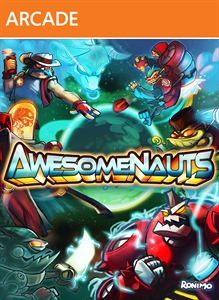
Awesomenauts | Review


Posted: August 14, 2012

My son is really into League of Legends. He eats that stuff up pretty hardcore. Over the last few years I've made a concerted effort to join him in this game only to come to the realization that I'm simply not cut out for the "learn by humilating defeat" style of play. I wanted to try and find something that would appeal to his tastes but also cater to me. Imagine my surprise when I find a game that could do just that. Enter Awesomenauts!

Wizorb | Review


Posted: August 11, 2012

Someone over at Atari really dropped the ball when they didn’t maintain creative rights to Breakout. Granted it was 1976 and ripping off games – which consisted of Pong back then – was all the rage. Once a new game had released, everyone and their brother made their own version of it. And by version I mean clone.

“Look the Sears one has orange blocks!”

“Woah, the Radio Shack one has two paddles!”

Strangely, these first few games are still being reproduced today. Every piece of consumer electronics, from iPods to digital watches plays Breakout, in some form. Ever own a cell phone that didn’t have a version already built in? Hell, when aliens find the Voyager probe I’m pretty sure the first thing they’ll do with it is boot up Block Breaker.

Over the years, Breakout hasn’t witnessed its share of innovation. Even Pong could be said to have evolved into today’s tennis games, but not poor old Breakout who only survives thanks to nostalgia. And the fact that it’s super easy to make. However, some standout titles have implemented new gameplay mechanics -- for better or worse.  A few games started giving the paddle weapons to eliminate hard to hit blocks. MagicBall even gave us 3D structures to tear down instead of a 2D plane of bricks, as well as the now-standard array of weapons.  Breakout on the Playstation tried hitting up the then popular mascot market of Mario, Spyro and Crash Bandicoot by giving the blocks faces, personalities and storylines – it surprisingly didn’t do so well. Imagine Resident Evil 2, if you played the whole game as that unlockable square player, Tofu. And instead of shooting zombies, you’re slowly bouncing balls at frickin’ blocks!

The next logical step, obviously, was to implement RPG elements into the fray. That’s where Wizorb comes in. This little indie title first debuted as an Xbox Live Indie game and did what every good title there does: it got the hell out! But just how well do an RPG and a Brick Breaker mesh to form a cohesive game? And can Wizorb break out of the mediocrity the genre is known for.

FEZ | Review

Posted: August 5, 2012

Vaporware has been condensing recently, with Duke Nukem Forever hitting the shelves after years of development. Compared to that abomination and its generational gap development time, Fez’s five year nostalgia-taunt seems tame. Since 2007 Fez has routinely made its presence known, soaking up every indie and innovation award it could get its grubby little mitts on. But since 2007, when graphical superiority was all the rage and an NES-inspired puzzle platformer was a step outside the box, a huge portion of indie developers have begun using “8-Bit” aesthetics. So can Fez hold its own among today’s sea of retro puzzle platformers?

Puzzle Quest 2 | Review

Posted: August 2, 2012

Puzzle Quest 2 is one of those games that at first glance you say, "My grandma plays Bejeweled and next thing you know I'll be playing bingo on Wednesday nights. Pass." Maybe that was just me, but my seven year old was begging me to have a game we could play together. I caved and picked up a copy for my iPad. Well 35 hours into this game I think it's safe to say that there's something it has going for it. Why the iPad? Well I had played the first Puzzle Quest on my PC and Xbox 360 and felt that this honestly is the type of game that would work perfectly on the iPad. Turns out I was right.

Earthbound | Déjà-Review

Posted: July 2, 2012

Every hobby has its grails. Game collecting is no different. Grails can be rarities (Nintendo World Championships, Little Red Hood, or Super Noah’s Ark 3D, just to name a few), are incredibly rare and fetch insane prices. Such games aren’t usually what you would call quality, though; their rare status stemming from low demand and lackluster development. Other grails are more a matter of personal taste typically being referred to intimately by owners as classics. Games like Chrono Trigger, Secret of Mana, and Castlevania: Symphony of the Night, meanwhile, embody classic, defining a generation, selling well in their time, and beloved by players then and now. These titles are high on collectors’ wish lists as well as short lists of games never to part with. Earthbound is one such game, topping the charts for both most wanted and most beloved, and demanding triple digit prices for even poor condition cartridges.  

I spent years wondering what was so amazing about this near mythical game. Nintendo seemed disinterested in it, barely acknowledging its existence. Little did I know that Earthbound was the second game in the Mother series, the first and third only having a Japanese release. In Japan, characters from Mother 1, 2, and 3 are among Nintendo’s most famous,  fitting right in with Smash Bros.’ most famous characters, even though in other countries the Mother misfits might seem out of place.

I recently acquired this legendary cartridge, thinking it would at least be a good addition to my collection. I expected a traditional 90’s RPG. You know the kind: a band of four sprites set out on a journey to save the world, leveling up as they go, blah blah blah. But after five hours had drained away, it was 5am, I hadn’t blinked in ages, and I began to realize Nintendo had committed one of the most heinous gaming crimes of the ‘90s.

Rayman Origins | Review


By: Ryan Seiler
Posted: June 28, 2012

Poor Rayman. Poor, poor Rayman. The guy can’t seem to catch a break. His first game debuted on the original Playstation at a time when anything less than cutting edge 3D graphics were looked down upon. Thankfully, some saw that the game could hold its own, playing as well as any 2D platformer at the time and using the PS1’s graphical capabilities to create a matte-painting aesthetic that still holds up today. Hardly something you could say about the “cutting edge 3D games” so many were distracted by when overlooking Rayman’s first Playstation adventure.

Rayman still was able to spark a franchise; just one that didn’t quite understand where it stood in the world. Later games tried to push into 3D, completely abandoning the gameplay and art style that made the original so charming and fun to play. Then after a few sad Gameboy launches (and even a Rayman golf game), the final blow came when someone at Ubisoft decided that the best way to revive Rayman was to fill his next title with a bunch of annoying, babbling ‘Rabbids,’ effectively turning the franchise into a series of mini-games designed to show off Nintendo’s motion controls. The new games sold decently, mostly due to the first Rabbids game debuting on the enormously successful Nintendo Wii, but in the process, losing the platformer audience that the series appealed to from the beginning and ultimately losing its new casual audience after the demand for such trivial compilation games reached sequel saturation. Poor, poor Rayman seemed destined to fade away.

Halo: Combat Evolved Anniversary | Review

 
By: Ryan Seiler
Originally posted at Project-Blu.com on September 4, 2011

It’s fair to say (at least for Xbox fans) that Halo has been one of the most influential games of the past decade. To commemorate Halo’s tenth anniversary (and to make everyone feel old), Microsoft and 343 Industries have made Halo: Combat Evolved Anniversary; an exact level for level, word for word remake of the 2001 classic. Halo has always been one of my favorite games, so when I heard about a possible remake I was understandably apprehensive. Big companies don’t have a good track record of remaking or revisiting their big franchises once those franchises leave their original creators’ hands. Thankfully, though, having immersed myself in the final product, I can say it’s clear that everyone involved in the process had the same apprehensions when it came to the care and attention to detail a Halo remake would require.

Catherine | Review


By: Ryan Seiler
Originally posted at Project-Blu.com on September 4, 2011 
   
In recent times, game developers have played it safe. Sequels and shooters are the way to go if you want your multimillion dollar game to be a surefire financial success. So, if you’re a game studio that thinks outside the box, releasing a genre-bending new IP into this sea of sameness is a great way to get noticed. A pink box with a pair of perky tits on the cover doesn’t hurt, either.

Atlus, the makers of the Persona series and Demon’s Souls, is well known for their bravery and ability to pump out new ideas on a seemingly continual basis. And unlike other Japanese game studios, they always faithfully localize their games to whoever wants to experience them. When Catherine first came onto the scene in early 2011, the developer, synonymous with the abstract and weird (at least to western eyes), initially hesitated on a North American release. The studio was worried it wouldn’t sell in America due to it being a combination of Qbert, a dating simulator, and A Nightmare on Elm Street. The idea that anyone would even try to make a game like this is almost unheard of, but after all is said and done, this is one of the most unique, captivating and enjoyable games yet this year.

Dead Space 2 | Review


By: Ryan Seiler 
Originally posted at Project-Blu.com on July 17, 2011    

Isaac Clarke, the unfortunate engineer of Dead Space, makes his return, along with a horde of necromorphs, a new marker, and the all-powerful plasma cutter in Dead Space 2. Visceral Games's first installment in the franchise was an instant blockbuster and kept the already minuscule survival horror genre alive. Does its sequel stand up to Dead Space's standards or surpass them entirely?

Red Faction: Armageddon | Review


By: Ryan Seiler
Originally posted at Project-Blu.com on June 28, 2011 
 
There’s something entrancing about knocking things down. From the time we’re babies until the day we die, destruction seems to be engrained in our psyche. Setting up a room full of dominos or building a sand castle will never be as entertaining as watching them succumb to the force of gravity after a light poke or an overzealous stomp. The Red Faction franchise has built its legacy on that very fact; destruction is fun.

My first encounter with the Red Faction games was Red Faction Guerrilla, an open world, go-anywhere, destroy everything any way you want kind of game. Although flawed in many ways; the story, graphics, or presentation for example, the gameplay was solid and was a blast to experiment with. Two years later, Volition Inc., the minds behind Red Faction, released the next installment to the franchise, Red Faction Armageddon. Made from the same engine as Guerrilla, Armageddon has stripped much of what its predecessor is known for, in light of a more streamlined linear venture with little variability or adaptability in gameplay. Do all the new changes enhance a previously flawed game? Or do they ruin the fun for everyone?

Killzone 3 | Review


By: Ryan Seiler
Originally posted at Project-Blu.com on June 8, 2011

The Helghast are back and more bad-ass than ever in Killzone 3. SONY sunk a lot of money into it's favorite shooter and it definitely shows. Likewise, Guerrilla Games has learned from it's past mistakes and has finally made a game that is as good as it looks.

To be honest I had never played a Killzone game until after Killzone 3's release. To see what all the hype was about, I went out and bought Killzone 2 so that I would at least have some backstory when playing its sequel. I wasn't very impressed. Sure the graphics looked mind-bogglingly good, but the controls and story were decent but felt sloppy. After completing the game I wasn't expecting much from Killzone 3. But after completing Killzone 3, well, let’s just say I went out and bought the first Killzone the next day and I am contemplating getting the PSP spinoff game Killzone: Liberation as well.